
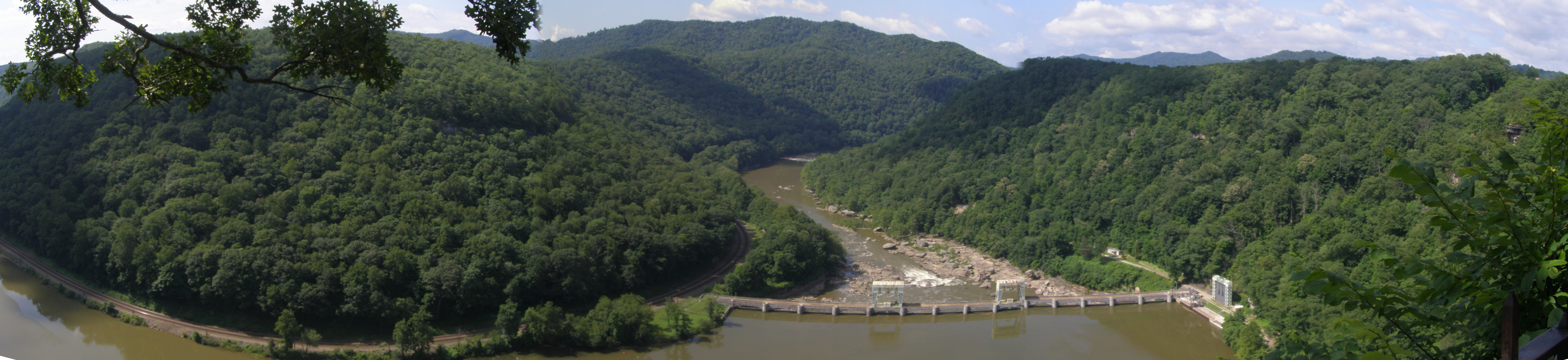
Hawks Nest Lake sits at the bottom of one of West Virginia’s most dramatic gorges – a New River impoundment in Fayette County reached by an aerial tramway that drops from the clifftop lodge at Hawks Nest State Park down to the water. From the lake, jetboat tours roar up into the New River Gorge, making this small lake the gateway to some of the most spectacular scenery in the eastern United States.
This guide covers Hawks Nest Lake: the tramway and jetboat rides, the history, the fishing, and access. It’s part of our growing West Virginia Lakes Database.
- Hawks Nest Lake at a glance
- The tramway and jetboat tours
- History: the Hawks Nest Tunnel
- Fishing and recreation
- Getting there and what’s nearby
- Know before you go
- Frequently asked questions
- How do you get to Hawks Nest Lake?
- What can you do at Hawks Nest Lake?
- What was the Hawks Nest Tunnel disaster?
- Where is Hawks Nest Lake?
Hawks Nest Lake at a glance
- Setting: a New River impoundment in a deep gorge at Hawks Nest State Park
- Location: Fayette County, southern West Virginia (near Ansted & Gauley Bridge)
- Built: Hawks Nest Dam, 1930s (hydroelectric)
- Access: by aerial tramway from the park lodge; jetboat tours into the New River Gorge
- Top fish: smallmouth bass, catfish, and New River species
The tramway and jetboat tours
The signature experience is the aerial tramway: from the rim-top lodge and overlook, an enclosed tram carries visitors down the steep gorge wall to the lake and marina far below – a thrilling ride with big views. At the bottom, jetboat tours run upstream into the New River Gorge National Park, threading the canyon beneath towering cliffs and, in the distance, the famous New River Gorge Bridge. It’s one of the most scenic short trips in West Virginia.
History: the Hawks Nest Tunnel
The dam and lake are tied to a sobering chapter of American history. In the early 1930s, workers drilling the Hawks Nest Tunnel to divert the New River for hydropower were exposed to silica dust, and many died of silicosis – one of the worst industrial disasters in U.S. history. The lake and the state park today carry that memory alongside their beauty, a reminder of the human cost behind the power and the scenery.
Fishing and recreation
The lake offers fishing for smallmouth bass, catfish and other New River species, with the marina providing boat access. A West Virginia fishing license is required. Beyond the water, Hawks Nest State Park has a lodge, a restaurant, the rim-top overlook (one of the most photographed views in the state), a museum and trails. It’s a compact but unforgettable destination.
Getting there and what’s nearby
Hawks Nest State Park is at Ansted on US-60 in Fayette County, southern West Virginia, about 40 minutes from Beckley. It sits at the southern end of the New River Gorge National Park, with the New River Gorge Bridge, Babcock State Park (and its famous Glade Creek Grist Mill) and the whitewater country all close by.
Know before you go
- Tramway & jetboat seasons: these run seasonally (mainly summer/fall) – check hours before visiting.
- Fishing license: a West Virginia license is required.
- Don’t miss the overlook: the rim-top view over the gorge is free and spectacular.
Frequently asked questions
How do you get to Hawks Nest Lake?
By an aerial tramway that descends from the Hawks Nest State Park lodge on the gorge rim down to the lake and marina at the bottom.
What can you do at Hawks Nest Lake?
Ride the tramway, take a jetboat tour up into the New River Gorge, fish for smallmouth bass and catfish, and enjoy the state park’s lodge, overlook and trails.
What was the Hawks Nest Tunnel disaster?
An early-1930s tunnel project here exposed workers to silica dust, causing many deaths from silicosis – one of the worst industrial disasters in U.S. history.
Where is Hawks Nest Lake?
At Hawks Nest State Park in Ansted, Fayette County, southern West Virginia, at the southern end of the New River Gorge.
Related: explore the small lakes of West Virginia, or head back to the West Virginia Lakes Database.
Explore more West Virginia lakes: the largest lakes in West Virginia and the deepest lakes in West Virginia.